Monday, 17 February 2014

MUKHA SHUDDHI - MOUTH PURIFIER


According to ayurveda, many disorders relating to physical health (and consequently mental health) are caused by poor digestion. In Ayurveda, agni (fire) is likened to digestion because just like agni, digestion transforms as well, using the different digestive juices, acids and enzymes. What happens when the fire/heat is not enough? You do not get the desired output. What happens if the fire/heat is too strong? It burns and destroys. Similarly, what happens when digestive agni is not enough? Food remains undigested and therefore, unabsorbed. This leads to a cascading wave of harmful effects like accumulation of undigested and unabsorbed food in the large intestine which over a period of time turns into toxins and eventually leads to disease. What happens if the digestive agni is too strong? Same thing as when you overcook food. The essential nutrients are destroyed, leading to deficiencies, weakening of immune system and consequently, disease. Therefore, just like the real agni, the digestive agni should also be tended well. And one of the brilliant ways to aid digestion is a wonderful home made "mukha shuddhi" (literally means mouth purifier) or mouth freshener.

The usual perception that people have of mouth fresheners is something made out of mint and sweet. At work places, I see smokers eat these after smoke or non smokers after their meals. Reminds me of me once upon a time. At work places during trainings or seminars, they will have a bowl full of them neatly arranged on the tables. These days, you often find a bowl full of them at service counters as part of 'customer service'. There is a range of sugar free mouth fresheners available. What I really do not understand is that people are happy to consume huge amounts of sugar through cakes, sodas, ice creams, cookies, biscuits and other sweet foods but when it comes to a teeny tiny mouth freshener, they want it to be sugar free. Most of the sugar free mouth fresheners will have either, all or a combination of the following:
sweetener 950 - Acesulphame Potassium
sweetener 951 - Aspartame
sweetener 955 - Sucralose
sweetener 961 - Neotame

Type in these words in google and you will see the word 'cancer' peppered everywhere. Do I believe that these artificial ingredients which are so commonly used in so many products cause cancer? I have my doubts. But the question is not relevant to me and I do not want to be one of those people who think anything and everything causes CANCER! My reason for not eating it is simple. It does not sound like food. You google these things (refuse to call them food) and all the information you get is molecular formulae and diagrams of molecules and IUPAC name and CAS number and Molar mass and other weird stuff. Does this sound like food? Why do we need to manufacture sweeteners in laboratories and factories using machines when there are natural sweeteners available? Why do we need to produce ANY food in laboratories and factories? Does this make any sense at all?

Anyways, point being, why not have a mouth freshener which is completely home made, natural and aids in digestion! The ingredients used in the mouth freshener have many nutritional benefits but for the purpose of this article, I will only mention the ones that are relevant to digestion.

Ayurvedic information:

Ingredients
Vaata
Pitta
Kapha
Rasa
Virya
Vipaka
Fennel Seeds
Sweet, Astringent
Cooling
Sweet
Sesame seeds
Sweet, Bitter, Astringent
Heating
Pungent
Flaxseed/Linseed
Sweet, Pungent
Heating
Pungent
Ajwain
Pungent
Heating
Pungent

Fennel seeds are unique because being a spice, it is heating. But it also tastes sweet and therefore is cooling thereby balancing the heating qualities. The heating quality stirs the appetite before meals and the cooling quality aids in digestion after meals. It relieves gas and bloating and is very useful in reducing colic. If you are feeling bloated, eat some fennel seeds for quick and instant relief. Fennel also helps freshen your mouth by reducing bad breath and body odour that originates in the intestines. Fennel has been used in treating digestive disorders, constipation, colic, diarrhoea, flatulence, reducing burping, acid reflux and alleviating nausea.

Sesame seeds have heating properties which promotes digestion and oily kapha qualities which lubricate the intestines. Chewing sesame seeds forms part of ayurvedic dincharya (vague translation of which is 'routine') as it helps in keeping teeth pearly white and clean, improves the enamel of the teeth, keeps gums healthy and reduces the bacteria in the mouth. Sesame seed oil has been used for oral health in Ayurveda to prevent tooth decay, halitosis, bleeding gums, dry throat, and for strengthening the teeth, gums and jaw. Clinical research now confirms that it compares favourably to chemical mouthwash (chlorhexidine) in improving plaque-induced gingivitis and that it is capable of reducing oral plaque formation.

Flax/Linseeds are rich in fibre and therefore provide relief to patients of constipation, piles and fistula. Raw flax seeds contains the chemical hydrogen cyanide (HCN) or cyanogenic glycosides which can be toxic if consumed in large quantities. So, it is better to roast them but not at high temperatures as this will destroy the Omega 3 content in it. 

Ajwain contains a chemical called thymol in abundance which helps the release of gastric juices in the stomach which help digestion. Ajwain, very much like fennel seeds, kindles appetite and taste buds and gets rid of gas in intestine. Its mild alcoholic qualities provides instant relief from stomach pain. Ajwain is also very commonly used to treat flatulence, indigestion, acidity and hyper acidity. Ajwain also cleanses your mouth and hence is a great ingredient for a mouth freshener.


Preparation time: 5 minutes
Cooking time: 5 minutes
Difficulty: Easy
Type: Other
Vegan: Yes

Ingredients:
1 cup Fennel seeds
1 cup Sesame seeds
1 cup Linseed/Flax seeds
¾ cup Ajwain seeds
1 tsp Turmeric
2 tsp Lime juice
Black/Rock/Himalayan (powdered) salt to taste

Preparation:
  1. Mix all ingredients in a bowl and let the mixture be for 10 minutes
  2. Now roast the mixture in an iron skillet on slow to medium heat for 5-10 minutes. After roasting for 5-10 minutes, if you run your fingers through the mixture, it may still seem a bit moist. Do not worry.
  3. Take the mixture off the heat and spread it on a dish to cool down. Fresh, home made, colourful, healthy mouth 'purifier' is ready! Store in glass jars.
Pitfalls:
Do not roast on high heat. If the mixture starts smoking, then it means that the supply of heat is too high and the mixture has started burning.

Notes:
  1. Eat two teaspoons of this mixture after every meal.
  2. I like this mixture a lot and I know many people (including me) who will have this mixture even in between meals. Which is OK. But this mixture is heating and therefore, you need to be careful especially in summer when agni is naturally high. In summers, restrict consumption and have it only after meals.
  3. It is best to use finely powdered salt for this preparation. Usually the 'black salt' which you get in Indian stores in the West is ground into fine powder. If not, just ground the himalayan or rock salt into powder using mortar and pestle. Always good to have such sadhanas in the preparations.
  4. Please refer my post Getting Started With Ayurveda for understanding of Ayurvedic terms and concepts.

Tuesday, 4 February 2014

PEETH PERUN DHABBU MIRCHI (CHICKPEA FLOUR CAPSICUM SUBJI)


This is another very typical Maharashrian home made preparation which you will never find in restaurants. This yummy and savoury dish consists of capsicum stir fried in flavours of mustard seeds or cumin or fennel seeds mixed with partially crispy chick pea flour and ground coriander seeds. Capsicum or Bell Peppers or Sweet Peppers are available almost everywhere across the globe and the preparation is quick, easy and simple. While buying capsicum, make sure that the skin is firm and taut and that there are no spots on the skin. Buy it organic because capsicum is one of the dirty dozen. “Peeth perun Dhabbu Mirchi” literally means “planting chick pea flour in capsicum”. This dish is one of my favourites because it tastes so good and is very simple in preparation.

General health information: Capsicum is a very good source of Vitamin A and Vitamin C and therefore very high in antioxidants. It is low in saturated fat, very low in cholesterol and sodium and therefore it is used for heart and blood vessels related conditions like high cholesterol, poor circulation, excessive blood clotting and preventing heart disease. Capsicum speeds up the metabolism and helps burn more calories. It also improves digestion by increasing stomach secretions and is used for various digestion related problems including upset stomach, intestinal gas, stomach pain, diarrhoea and cramps.

Chickpea flour also, like capsicum, is low in saturated fat and very low in cholesterol and sodium. It is rich in minerals like Magnesium, Copper, iron and phosphorus. It is also high in dietary fibre, protein and folate. Also, due to its slow glycemic index, it is a recommended food for diabetics.
Ayurvedic information:
Dosha information: V↑P↑K↓
Rasa (primary tastes): Sweet, Astringent, Pungent, Salty
Virya: Heating
Vipaka (post digestive effect): Pungent/Sour

The ayurvedic fraternity seems to be divided on whether capsicum aggravates or pacifies Pitta. However, I feel that most of them are inclined towards the view that it aggravates Pitta. Similar is the case with rasa. Some say that capsicum is sweet and pungent while others say that it is astringent and pungent.

Capsicum is a member of the night shade family. (Other common night shades being potatoes, tomatoes, chillies and aubergines – I know – all the yummy ones!) Night shades are usually avoided in Ayurveda and many believe that they are aggravating for all three doshas. They possess inflammatory properties especially relating to joints. Some say that for people suffering from arthritis or other types of pain and inflammation, it is advisable to avoid them altogether. But then again, there are 'pro nightshades supporters' who do not believe that they cause inflammation or pain in people suffering from arthritis. So, in my opinion, it is best to keep observing the reactions of your body to night shades in the short term and the long term and accordingly adjust its inclusion in your diet. Committed yoga practitioners should definitely avoid it because of its aggravating qualities.

This preparation aggravates Vata and Pitta. It should be ideally combined with fresh flat bread made out of wheat, rice or sorghum (jowar). The high Kapha dosha in these breads will balance the high Vata dosha (in Capsicum and Chick pea flour) and the Pitta dosha (in Capsicum). Flat breads made from these grains will also add the sweet taste to your meal.

Preparation time: 10 minutes
Cooking time: 20 minutes
Difficulty: Easy
Type: Main course
Serves: 2
Vegan: Yes

Ingredients:
3 medium sized green capsicum/bell peppers
2 tbsp ghee/oil (vegans should use oil)
2 tsp mustard seeds
½ tsp asafoetida/ hing
¾ cup chickpea flour
2 tsp coriander powder
2 tsp cumin powder
½ tsp turmeric powder
1 tsp ajwain
Rock/Himalayan Salt to taste

Optional:
Coriander/Parsley for garnishing (not optional for Pitta individuals)

Preparation:
  1. Prepare a mixture of the chickpea flour, coriander powder, cumin powder and ajwain and keep aside.
  2. Cut the capsicum into squares of medium size and listen to the crisp sounds of the knife cutting through the fresh, firm and stiff skin capsicum. Remove the seeds.
  3. And now? – the usual – preparation of the chaunk! Take ghee/oil in pan and heat it over low to medium heat. Add the mustard seeds and listen to the sweet melody of the popping seeds. Once they stop popping add the asafoetida and let it fry for a few seconds. Oh that intoxicating aroma of asafoetida is ever present in the air near lunch time in any Indian household. Either it comes from your own house, or your neighbors.
  4. Now add the pieces of capsicum, salt and turmeric and stir well making sure that the flavours of the chaunk coat the capsicum. Cover the pan with a steel plate and fill the plate with some water. Check it occasionally till the capsicum is half cooked.
  5. Add the mixture of chickpea flour, one tbsp at a time. Stir well, add another tbsp so on and so forth. Keep stirring the mixture to ensure that the chickpea floor does not stick. A little bit will stick anyways which is alright. Keep scraping it using a spoon. Usually, the water released by the capsicum is enough to keep the chickpea flour moist. But if not, you can sprinkle little water. But be careful not to add too much. Otherwise, the texture of the chickpea flour will be like a paste. That is not how it should be like for this dish. It should be crispy, dryish and granular as you see in the picture. Once, the chickpea flour turns golden brown and crispy, the dish is ready. Serve with traditional Indian flat bread.
Pitfalls: 
  1. The chickpea flour must be added one tbsp at a time. If you add the whole lot at once, it may form big lumps. 
  2. When you heat the ghee/oil before putting in the mustard seeds and asafoetida, make sure that the ghee/oil is not too hot. If the ghee/oil overheats, first of all its composition will change chemically which is not good for health. Secondly, it will destroy the flavour and potency of the mustard seeds and asafoetida. So, it is better to start with low heat, add 2-3 mustard seeds to test the ghee/oil and increase the heat, if required. If the oil starts smoking and the mustard seeds pop too quickly, then the oil and mustard seeds have been damaged. Ideally, the mustard seeds will sizzle for 10-15 seconds and then pop for 30-35 seconds
Notes: 
  1. In the West, you can find chickpea flour in any Indian store. It may also be titled as “Besan”. It is made from black chickpeas which I have rarely come across in Western super markets. 
  2. Individuals with Pitta constitution should use Coriander as garnishing to counter the Pitta aggravation caused by Capsicum. 
  3. Remember – ALWAYS use ajwain when preparing any dish containing chick pea flour. Chick pea is denser than other lentils and therefore, relatively harder to digest for people with sensitive digestive systems. This problem can be dealt with by using ajwain which greatly helps in digestion.
  4. Please refer my post Getting Started With Ayurveda for understanding of Ayurvedic terms and concepts.
Variations: 
  1. Instead of mustard seeds, you can use cumin seeds or fennel seeds to change the flavour. If you use cumin seeds, skip the cumin powder and increase the quantity of coriander powder by two tsp.
  2. If you want to take this recipe to another level using a very simple addition, sprinkle two tea spoons of fennel seeds powder just before serving and mix well. My sister in law gave this advice to me and the dish smells and tastes so much better.
  3. This dish can also be prepared using the green part of spring onions which most people in the waste throw away. Chop the green bit of the spring onion into quarter inch long pieces. Recipe is exactly the same except that the chickpea texture in this recipe should be like a paste unlike the crispy texture mentioned in the above recipe. This can be achieved by adding more oil.

Monday, 27 January 2014

FOOD WISDOM #1

From the earth came herbs, from herbs came food, and
from food came the seed which gave life to the humans.

                                                                           -Taittirya Upanishad

Sunday, 19 January 2014

THE ONE INGREDIENT ICE CREAM


What if I tell you that you can make ice cream at home without the ice cream machine? What if I tell you that you can make this ice cream in ten minutes? What if I tell you that it is dairy free? What if I tell you that it is sugar free or for that matter – sweetener free? What if I tell you that it is made out of one ingredient? I know. I was the same. My house mate taught this recipe to me. It has already been posted on the internet by other websites or blogs but he claims that the knowledge of this recipe unfolded within him without referring to any books or internet just like true knowledge enfolds within evolved yogis. I believe him. And now, without further ado, I bring you – magic!

General health information: A banana gives you a quick boost of energy and just one banana can be very filling making it a great option for weight watchers. It is very low in saturated fat, cholesterol and sodium and high in Vitamin C and manganese, and a very good source of Vitamin B6. Bananas are extremely high in potassium hence aiding in maintaining normal blood pressure. It is also a good source of dietary fiber and hence prevents constipation and restores normal bowel action. Bananas supply the body with high amounts of fructooligosaccharide, a pre biotic substance (one which encourages pro biotics, the friendly bacteria in the digestive system). The fructooligosaccharides ferment in the digestive tract and enhance the body's ability to absorb calcium.
Ayurvedic information:
Dosha information: V↓P↑K↑
Rasa (primary tastes): Sweet
Virya: Heating
Vipaka (post digestive effect): Sour
Preparation time: 10 minutes
Difficulty: Easy
Type: Dessert/Sweets
Serves: 4
Vegan: Yes

Ingredients: 2 extra ripe bananas. That is it. Really.

Preparation:
  1. How many times have you chucked bananas into the bin because they were too ripe? Peel these over ripe bananas, cut each banana into three pieces and put them in the deep freezer for a day. This takes two minutes. Ok, four minutes if you are slow. Now, only six minutes of preparation time is left.
  2. The next day, put these frozen bananas into the blender for six minutes and lo and behold! You have sugar free, dairy free ice cream with an incredibly rich, creamy, soft texture completely free of crystals. I know what you are thinking. “But doesn't it...” – NO. “But don't you...” – NO. “Do you...” – NO. Just try it to see what I am talking about.
  3. The only sadhana you do in this recipe is sit back, bring your complete awareness to your tongue, close your eyes to block the ever distracting sense of sight and enjoy.

Pitfalls:
Not sure if it is possible to go wrong with such a simple recipe. Just make sure that the bananas are over ripe.

Notes:
  1. This is a super high Kapha recipe. Bananas increase the Kapha dosha in your body and freezing them further amplifies it. So, eat this ice cream only on hot summer days.
  2. Please refer my post Getting Started With Ayurveda for understanding of Ayurvedic terms and concepts.
Variations:
  1. You can use the above recipe as base ice-cream and then play with it. Like I said above, the possibilities seem unlimited. You can add a little bit of yogurt and blend it with the frozen banana and serve honey as a topping.
  2. You can add ground coffee or ground cacao beans to the base ice cream
  3. You can add roasted ground peanuts or hazelnuts or macadamia nuts or almonds or pistachios when you blend the frozen bananas.
  4. You can add frozen mango or passion fruit or berries of your choice.
  5. You can add freshly ground spices like cinnamon or cardamom or nutmeg or cloves.

Friday, 17 January 2014

GOING ORGANIC THE SMART WAY

There are many well meaning people who want to go organic but the apparent cost of doing so is so ridiculously high, that people are quick to dismiss this option. I remember how I used to march out of wholefoods shops outraged and indignant. Ohhh these pretentious people with money raving about their chia seeds and goji berries and quinoa and spirulina and other weird sounding foods. Yes. It is all super healthy. But what is the point if a large section of society cannot afford it? But the good news is that with progression of time, more options have become available which are relatively cheaper. So, in this post, I just want to share some alternative sources of organic produce which I have come across till now and some smart ways of doing it.

Further, there are ways to “phase” into buying organic. Or if you cannot afford to go 100% organic, you can always choose the “hybrid” option and yet substantially reduce the harm done by pesticides. It involves a bit of research and continuous monitoring but is it so unreasonable to spend some time on something as important as your health? Also, you will have to spend some additional money than usual so the first step can be to determine the extent by which you can stretch your food budget.

The Dirty Dozen: The dirty dozen is a list of vegetables/fruits with the highest amount of pesticides residue issued annually by Environmental Working Group (EWG) based on the pesticides residue tests conducted by Food and Drug Administration (FDA) scientists. It is strongly recommended that you buy these foods organic. The list is updated every year and the latest list which was issued in 2013 contains the following vegetables/fruits:

Apples (89)
Strawberries (82). This is a picture of how they grow strawberries. Make your decision:

Grapes (43)
Celery (85)
Peaches (100)
Spinach (60)
Sweet bell peppers (86)
Nectarines (84)
Cucumbers
Potatoes (58)
Cherry tomatoes
Hot peppers

'An apple a day keeps the doctor away'. Of all the fruits in this world, apple is always associated with 'going healthy'. When people decide to start eating healthy, first thing that they say is 'OK, I am going to have an apple everyday'. Little do they know! The FDA tests different vegetables and fruits and rates them on a scale of 100, 100 being the worst. Apple was rated at 89. Having a conventionally grown apple everyday is going to fast bring the doctor to your door step. The numbers in brackets besides the above foods represent the rating. As you can see, peaches are the worst.

The Clean 15: This is the list of vegetable and fruits with relatively less amount of pesticide contamination and hence you can save money by buying conventionally grown produce for these items.

Onions
Sweet corn
Pineapples
Avocado
Cabbage
Sweet peas
Asparagus
Mangoes
Eggplant
Kiwi
Cantaloupe (domestic)
Sweet potatoes
Grapefruit
Papayas
Mushrooms

Besides the above items, the following items in my opinion should be bought organic if you can:
Milk – A high amount of antibiotics and hormones are used in the animals in conventional dairy production. There is nothing more to say – really.
Coffee – Coffee is a very competitive industry and a lot of chemicals, processing and taste enhancers are used in its production to cater to the taste buds of the increasingly demanding coffee drinkers. Also, the countries from which these coffees come from are not regulated for pesticides and chemical usage.

Grains: Grains have been found very low in pesticide residue so there is an opportunity for saving money by buying conventionally grown grains. But there are few exceptions to this. Soya and Corn are notorious for being produced using genetically modified farming methods. In many countries the labeling requirements are not stringent and hence there is no way to know whether the corn or soya is GMO or non GMO. In case of such ambiguity it is better to avoid these products and opt for organic. This means avoiding non labeled, conventionally produced soya beans, soya flour, tofu, miso, tempeh, soya sauce and anything that is produced using soya bean. I have noticed that many vegetarians in the west consume high quantities of soya related products as a substitute to meat. But there are many other sources of high protein like different types of lentils, beans, sprouts, nuts, seeds and it is okay to buy conventionally grown produce for these items. Another exception is rice. Research indicated that relatively higher amount of pesticide residue was found on rice because rice grows in stagnant water.

Sourcing: So now, we have a fair idea of what to preferably buy organic. Now, we identify the sources. As far as wholefoods shops are concerned, there are two types. The ones which have a strong 'pretentious' energy where people with money frequent so that they can appear cool and the ones which are owned and run by people who genuinely care about their health and nature. I prefer the later but it is worthwhile checking both types for the purpose of price comparisons. Another option is of course, the supermarkets. Though not an ideal option, they are able to sell whatever tiny percentage of organic produce they have at lower prices because of economies of scale. I am confident that in time as awareness about organic food increases, the variety of produce available in supermarkets will increase and the prices will go down. Also, keep looking for deals. Many times you get huge discounts on organic food in the super markets and the pretentious whole foods shops.

Another great option is organic co-operatives. Usually organic co-operatives are a group of individuals and families who come together and pool their resources to gain buying power. Buying in bulk helps them get discounts which are passed down to the members. These stores are owned and managed by members and majority of the staff working in such shops are volunteers cutting down costs even more. Almost all of them are not for profit and many times they also source their produce from the small local organic farmer thus eliminating middle men. Another way in which they cut costs is selling loose hence cutting down on packing costs.

Next option is identifying small local organic farmers. When I lived in Queensland, we had identified a local organic farmer who used to deliver the produce himself at no additional cost every Monday. He used to deliver the produce 4-5 hours after he picked it from his farm – very fresh and alive! Many times such small farmers might advertise on the internet. Or if you find a wholefoods shop in your town, ask the person working there where they get their produce from and then approach the farmer directly. You can also identify small organic farmers at open markets. Which brings me to the next option – home grown produce. If you visit any of the farmers markets, many times you find country folk who may not necessarily be farmers but who grow vegetables at home and they show up at the markets to sell their excess produce. They do not follow the stringent requirements which make their produce 'certified organic' but it is still good enough and most of them do not spray their produce with pesticides or chemicals. You can always ask the farmers about how they grow their produce and decide accordingly. And I think home grown produce has one advantage over 'certified organic' produce which is grown for commercial purposes – it is grown with love.

And last but not the least, the most fulfilling way of accessing organic food is – growing your own. If you have your own backyard or front yard or whatever piece of earth you have around your house, use it to grow veggies and flowers. It is a very enriching and enlightening experience and it will transform you. It will help you cultivate patience, gratitude, calmness, compassion and it will teach you many many lessons. I just feel that it is magical to witness the natural phenomenon of a plant growing out of a seed up close. If you do not have your own land, check if there are any opportunities for 'land share'. Land share is an arrangement which brings together people owning a spare piece of land but do not have time to grow their own produce and people who do not own land but are willing to grow their own. People with spare land let people interested in growing use their land in return for home grown produce. So, if you don't own land, check on the internet if you have any land share arrangement near your area. If none of these options work, get small pots and start growing simple things like herbs (very easy to grow) and greens.

The last thing which I would like to share is home made vegetable wash solution. You need white vinegar and a spray bottle. Fill the spray bottle with three parts water and one part vinegar and voila! you have home made vegetable wash solution. Spray it on your produce, rub it in gently and leave it for ten minutes before rinsing it off. Apparently, this solution helps reducing the impact of pesticides and kills of most of the bacteria. Use it generously on conventionally grown greens.


In countries with colder winters, it is possible that you will not find many different varieties of seasonal vegetables or fruits in organic stores. This may prevent you from having a balanced diet and it may become difficult to include necessary nutrients in your diet. In such cases, in my opinion it is much better to eat conventionally grown produce by buying it locally or in farmers markets than eating supplements (unless you have a deficiency) which are produced in factories using machines. To me, it does not make complete sense. Do you think Mother Nature said “Ok children, I have given you everything you need nutritionally except the humans will have to create companies which will set up factories consisting of machines and labourers/workers to produce supplements.” Yes, people may argue that Mother Nature did not intend for humans to create factories producing pesticides and fertilisers either. But to me, eating vegetables and fruits seems more closer to nature than eating supplement tablets of white, pink yellow or whatever colour they come in.  

So why eat organic if you can avoid it? There are other concerns which are bigger than your own personal health like ground water contamination, imbalanced ecosystems and soil erosion. But that is a subject for another discussion. For now, why not research the above options in your area and slowly phase into buying organic, if time and money permits.

Thursday, 9 January 2014

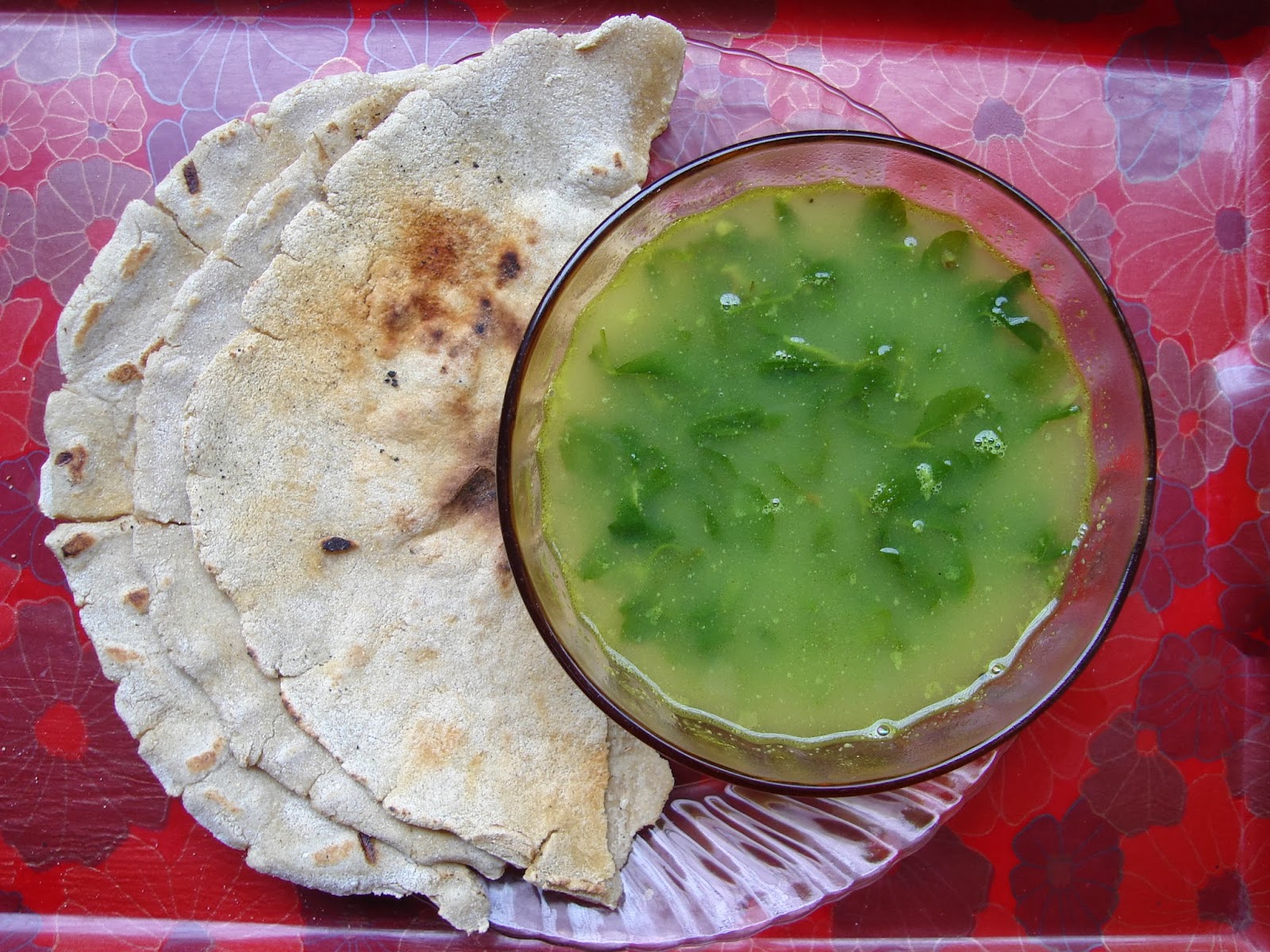
THE MAGIC POTION - METHICHE PAANI (FENUGREEK WATER)


This preparation comes from my native place, Khandesh and I was surprised that no information is available on the internet about this truly magical concoction. The intoxicating aroma and delightfully bitter taste of fresh Fenugreek prepared using the most basic of spices in combination with traditional flat Indian bread makes it a very simple yet extremely healthy dish. Although Fenugreek has innumerable health benefits, it should be used cautiously because of its potency.

Fenugreek (fresh, dried and seeds) is used commonly in various recipes across Asia, Middle East, North Africa and India. India being the largest producer of Fenugreek, this vegetable is easily available in markets across the country in its fresh form. In the West, I have never seen it sold in any of the supermarkets in its fresh form. Perhaps, the best source is Indian stores where they sell Indian vegetables or open markets. If not, it can be easily grown. I remember my parents used to grow Fenugreek when they used to visit my brother in U.S. And I myself, am currently growing some of my own. Get two one foot X one foot trays. Fill one tray with soil and scatter some fenugreek seeds randomly on the soil. Water regularly. It is unbelievable how quickly it grows. It is unbelievable to see what earth, water, fire and air can do. After two weeks, do the same with the other tray and this way you can stagger the growth of your fenugreek leaves.


General health information: As regards nutritional information, Fenugreek leaves are very rich in vitamins and minerals. Primary ingredients include calcium, potassium, phosphorus, iron and dietary fibre. It also contains vitamin C and vitamin K. Fenugreek leaves are truly a wonder herb with a vast range of health benefits some of which are:
  1. It is especially used in women’s health as it decreases uneasiness and menstrual cramps associated with PMS, reduces mood fluctuations during menopause and PMS, induces labour and eases child birth, treats hormonal disorders, helps with breast enlargement and increases breast milk production.
  2. Fenugreek is also used in many traditional hair products. It helps make your hair shiny and also keeps dandruff away. It also offers remedies against hair fall or thin hair. It is used in beauty products and helps to cure skin problems (wounds, rashes and boils) and improve skin complexion.
  3. This wonder herb is full of antioxidants and works as a mucus solvent thus providing relief from respiratory disorders like asthma, bronchitis, sinusitis, tuberculosis, cough, cold, pneumonia and sore throat.
  4. In recent research Fenugreek has been found to have anti-carcinogenic properties and effectively control liver cancer and prevents colon cancer.
  5. Fenugreek aids in lowering cholesterol, has cardiovascular benefits and lowers the risk of heart attack.
  6. Fenugreek acts as a very important part of diabetic diet and may be an effective treatment for both type 1 and 2 diabetes.
  7. Apart from the above, Fenugreek is also used to treat arthritis and rheumatism, cure fevers, improve digestion, cure constipation, increase libido and cure anaemia
Ayurvedic information:
Dosha information: V↓P↑K↓
Rasa (primary tastes): Bitter, Salty
Virya: Heating
Vipaka (post digestive effect): Pungent

This preparation aggravates Pitta. It should be ideally combined with fresh flat bread made out of wheat, rice or sorghum (jowar). The high Kapha dosha in these breads will balance the high Pitta dosha in Fenugreek. Flat breads made from these grains will also add the sweet taste to your meal.

Preparation time: 25 minutes
Cooking time: 15 minutes
Difficulty: Easy
Type: Main course
Serves: 2-3
Vegan: Yes

Ingredients:
1 bunch fresh Fenugreek (2-3 cups)
2 tbsp split peeled moong daal (split, peeled green gram)
1 tbsp ghee/oil (vegans should use oil)
2 tsp mustard seeds
½ inch ginger finely chopped
½ tsp asafoetida/ hing
½ tsp turmeric powder
Rock/Himalayan Salt to taste

Preparation:
  1. Soak the moong daal for 3-4 hours before the preparation. Take the soaked moong daal in a pan, add water twice the quantity of the moong daal and keep it on high heat till the water starts boiling. Once the water starts boiling, turn the heat to medium and cover the pan partially till the moong daal cooks – which should be 12-15 minutes. Always keep an eye on the pot as sometimes it may just overflow. Perfectly cooked moong daal is where the shape of the daal is intact but it is soft and you can chew it without any effort at all. Alternatively, you can use a pressure cooker. The proportions of the moong daal and water remain the same if you are using a pressure cooker. In case of pressure cooker, you keep it on high heat and switch it off after the steam is released 7-8 times. Although, this may vary a bit depending upon the size of the cooker, the make, the quality of the moong daal and the supply of heat. The water may be completely or partially absorbed by the daal. If some water remains, do not drain it away. Once cooked, keep aside.
  2. While the moong daal is getting cooked on the flame, pick the Fenugreek leaves. Fresh Fenugreek is available in markets in a bunch. In India, many vegetable vendors or hawkers offer fresh Fenugreek leaves which have been already picked from the stalks. Do not buy such Fenugreek where the leaves have been picked because separating leaves from the stalk and keeping them for extended period (more than an hour) in a plastic bag results into speedy loss of prana. The stalks keep the leaves nourished and fresh for a longer time. Besides, if you buy picked Fenugreek leaves, you are deprived of one of the most wonderful sadhanas – the sadhana of picking the fenugreek leaves from the stalks. Usually in India, a Fenugreek bunch will have a lot of soil sticking to its roots. Besides, the stalks are not used in cooking and so this involves an unavoidable task of picking hundreds of small Fenugreek leaves from the stalk. To many, this is a boring task. But it is meditative if you combine it with mantra sadhana. Each leaf or a bunch of three (usually you have three leaves at the end of every stalk) needs to be picked from the hundreds of stalks contained in a bunch. Every time you pick one leaf or a bunch of three, you repeat your mantra and that way you bless each and every leaf. Do this with complete awareness. Which other vegetable offers you the opportunity of blessing the food at such a micro level and such one pointedness of mind? I feel this helps you strengthen your relationship with food. So, the first step in the preparation is sitting down in a comfortable place, picking the Fenugreek leaves from the stalks and repeating your mantra every time you pick a leaf with one pointed focus. Once this is done clean the leaves properly under running water and keep aside. You do not need to chop the leaves.
  3. Take ghee/oil in pan and heat it over low to medium heat. Add the mustard seeds and wait for them to stop popping. Now add the chopped ginger and fry for a while taking care that the ginger does not turn brown or burn. Finally add the asafoetida. The flavours are ready!
  4. Add the cooked moong daal, Fenugreek leaves, turmeric and salt. Stir well and let the flavours seep into the Fenugreek and the moong daal for 3-4 minutes.
  5. Now add water. The name of the dish is Fenugreek Water. So, make sure that the texture is a bit watery but not too watery. It should be somewhere between medium thick and watery. Let it simmer on low heat for a while. Stir once in a while so that the Fenugreek does not clump together and enjoy the wonderful aroma of Fenugreek. Take it off the heat and enjoy with any traditional Indian flat bread.
Pitfalls:
When you heat the ghee/ oil before putting in the mustard seeds, ginger and asafoetida make sure that it is not too hot. If the ghee/ oil overheats, first of all its composition will change chemically which is not good for health. Secondly, it will destroy the flavour and potency of the ingredients. So, it is better to start with low heat, add 2-3 mustard seeds to test and increase the heat, if required. If the ghee/ oil starts smoking and the ingredients turn dark brown or black, then the ghee/ oil and the ingredients have been damaged.

Notes:
  1. For best taste: Crush the flat bread into medium sized crumbs. Pour the Fenugreek water over it. Mix using the tips of your fingers and feel its texture and warmth. Eat using your fingertips – mmmm, finger licking good!!
  2. Please refer my post Getting Started With Ayurveda for understanding of Ayurvedic terms and concepts.
Variations:The original recipe is without the moong daal. However, I thought that adding a tridoshic moong dal would balance out the dish to some extent and also add some body to it. 

Sunday, 5 January 2014

A YUMMY FILLING TREAT - SANJA, UPMA OR UPEET


Sanja/Upma/Upeet is another very famous breakfast dish in India especially in Maharashtra and South India. If poha represents the rice grain in Indian breakfast food, then upma represents the wheat grain. In Mahrashtra, Upma stands shoulder to shoulder with poha on any menu card.

There are many different variations of this dish across India with different types of vegetables and with different and varying amounts of spices. The luscious and smooth texture of the semolina cooked in the richness of ghee melts in your mouth. Prepared using the delicious flavours of ginger, mustard seeds, curry leaves and tomato with a variety of fresh vegetables and garnished with lime, coriander and coconut flakes makes this dish delicious, wholesome and nutritious.

General health information: Semolina is made from durum wheat and is fibre rich, protein rich, high-carbohydrate, low-cholesterol and low-fat. It is also very high in complex carbohydrates. Hence, it is digested slowly, keeps you full longer and prevents you from snacking between meals. Major nutrients include vitamins E and B, potassium, phosphorus and magnesium.
Ayurvedic information:
Dosha information: V=P= K=
Rasa (primary tastes): Sweet, Sour, Salty, Pungent
Preparation time: 15 minutes
Cooking time: 15 minutes
Difficulty: Easy
Type: Breakfast or snack
Serves: 1-2
Vegan: Yes

Ingredients:
1 tbsp ghee/oil (vegans should use oil)
½ cup rava, sooji, semolina
Water – usually twice the quantity of semolina. This may change according to personal preference of the texture of the upma.
1 tsp mustard seeds
½ inch ginger finely chopped
½ tsp asafoetida/ hing
8-10 curry leaves
1 small carrot cut into small cubes
1 small tomato chopped into small pieces
Rock/Himalayan Salt to taste
Lime

Optional:
½ tsp turmeric powder
1 small chilli or more/less depending on how hot it is cut in 1 inch pieces
Grated coconut/coconut flakes/desiccated coconut for garnishing
Coriander/Parsley for garnishing (optional – but mandatory if using chilli as the coriander will counter the heating effect of chilli)

Preparation:
  1. The preparation begins with a wonderful sadhana of dry roasting the semolina – one of my favourite. Take a pan and add the semolina in it on low to medium heat. Keep stirring the semolina in the pan and bring your full awareness to your nostrils. Notice how the wonderful scent of semolina wafts out of the pan and fills the room. Close your eyes and take it in. Once the semolina releases the fragrance, appears to be dry and free flowing and turns into a light cream colour, take it off the heat and keep it aside. Do not wait till it turns brown. If you want to save on preparation time for this dish, you can roast semolina and store it in a dry place. This way, you do not have to dry roast it when you decide to prepare upma and cut down on prep time.
  2. Take ghee/oil in pan and heat it over low to medium heat. Add the mustard seeds and wait for them to stop popping. Now add the chopped ginger and chilli and let it fry for a few seconds taking care that the ginger does not turn brown or burn. Now, add the hing and curry leaves and let them do their thing for a few seconds. I love this ritual of adding these preliminary ingredients and spices to the ghee/oil which is very common to many Indian dishes. I feel like a wizard from Harry Potter preparing some kind of a magic potion where every time you add an ingredient, its flavour and energies get imbibed in the ghee/oil – that ancient practice called “chaunk” or “phodni” in Marathi. Every time you add an ingredient, a different fragrance is emitted. And every ingredient does its own little performance – popping, crackling, sizzling, bubbling, exploding or bursting. Listen to these sounds and imagine how the flavours are now being transferred into the ghee/oil which will later coat every single grain of semolina giving it the taste of spices used.
  3. Now add the carrot and tomato and let it sauté for a minute or two. Add the semolina and turmeric and stir well. Let the juicy mixture coat each and every grain of semolina.
  4. While mixing these ingredients, heat the water till it boils. Now add the water gradually and keep stirring. There will be a loud sizzle and bubbling but keep stirring. Add salt. Continue stirring otherwise, the semolina will form lumps. Once all the water is absorbed by the semolina and it is as per the texture of your preference, the upma is done.
  5. Serve with a wedge of lime, chopped coriander and grated coconut/coconut flakes/desiccated coconut on top.
Pitfalls:
  1. When you heat the ghee/ oil before putting in the preliminary ingredients (mustard seeds, ginger, chillies, curry leaves and hing) make sure that it is not too hot. If the ghee/ oil overheats, first of all its composition will change chemically which is not good for health. Secondly, it will destroy the flavour and potency of the ingredients. So, it is better to start with low heat, add 2-3 mustard seeds to test and increase the heat, if required. If the ghee/ oil starts smoking and the ingredients turn dark brown or black, then the ghee/ oil and the ingredients have been damaged.
  2. When you add the water to cook, make sure you stir the mixture continuously so that no lumps are formed.
  3. Do not rush with the sadhana of dry roasting the semolina by turning the heat to high. It will get burnt and will get roasted unevenly. All good things take time and this sadhana will teach you patience. Synchronise your breathing with the stirring, enter fully into the sadhana and look out for the wonderful scent of roasted semolina.
Notes:
  1. There are two types of semolina – coarse and fine. Use the coarse one for this recipe. Fine semolina can work too as a substitute, but coarse is better.
  2. Chilli should be used only for its flavour and not for its kick because of the several health benefits which it offers. Individuals with Pitta constitution can go easy with the chilli or altogether without it especially in summer. However, the trio of lime, coriander and coconut will balance the effects of chilli. Kapha individuals can use some chilli. The heat and pungency of the chilli will negate the sweetness and heaviness of the semolina and thereby prevent the possible excess of the Kapha dosha in people of Kapha constitution.
  3. The base grain of semolina is wheat. Semolina retains the sweet, nourishing and stabilising quality of the wheat but is relatively lighter than wheat. Dry roasting the semolina makes it even lighter and dryer reducing the heavy and moist kapha qualities thereby making it easier to digest. Therefore, dry roasting is a key process involved in preparation of upma from the health perspective.
  4. Usually, this dish is made with base of onions and tomato is optional. But since I exclude onions from my recipes, I have kept tomato as a mandatory ingredient. Apart from carrot, you can use other vegetables like green peas, capsicum or green beans. These vegetables will go in at the same time as the carrot. It is best to not use more than two vegetables. Another important ingredient which is commonly used is urad dal (split, skinless black lentils) and channa dal (split, skinless black chickpeas). These go in after the mustard seeds.
  5. Please refer my post Getting Started With Ayurveda for understanding of Ayurvedic terms and concepts.
Variations:
  1. One common variation as regards preparation of upma is you can add water before adding semolina.